

Pre-Prep & Reception (EYFS)
The Reception Class at Stafford Prep is where the adventure begins! We give our children the very best start in life and we delight in seeing them blossom in our caring and stimulating environment.





In Reception class, we enable our children to develop self-confidence and a positive approach to learning.
We encourage them to take risks and to continually develop their skills. We have a small Reception class, which means that we get to know every child as an individual and support their needs. It means that we can celebrate each child’s uniqueness. We have an open door policy for our parents, allowing Reception parents to bring and settle their child into class.

The experience in Reception Class at Stafford Prep has been amazing! Our son comes home full of excitement every day and can't wait to tell us what he has been up to.
Reception Class Parent

Children in Reception are able to participate in clubs available including gardening, colouring and construction club.
Wrap around care is provided for all children between 8am and 6pm. Reception class children are able to use a wide range of playground equipment, so that they have fun whilst also developing their physical skills. They also have access to an outdoor area which complements indoor learning. Equipment has been carefully chosen to provide the children with opportunities to explore, investigate and lead their learning.
Reception Class Education
Children in Reception Class are encouraged and supported as they learn within the EYFS framework. They are taught by our Reception class teacher, but also supported further in creative subjects, such as music and PE, by specialist teachers. The children follow a holistic curriculum covering the seven areas of learning as outlined in Development Matters.
- Personal, social and emotional development
- Communication and language
- Physical development
- Literacy
- Mathematics
- Expressive arts and design
- Understanding the world
The children are supported individually through literacy through a story-based approach and progressive synthetic phonics using the Little Wandle scheme. Children begin by learning to match letter names and sounds, play rhyming games, begin to write letters and are introduced to the first key words.
We take a practical approach to numeracy through the use of songs, stories and games that develop a solid foundation and ensure that children enjoy their learning. The children are given opportunities to embed their learning and apply mathematical thinking through enriched play. We teach number skills, and help the children learn to apply their mathematical thinking to different situations.
During the Early Years, your child will learn through high-quality play. They will develop at their own pace, having fun, make friends and learn as they play. They become confident and secure children who, when the time comes, are well prepared for the transition to Year 1.
At Stafford Prep School, we love the children to be creative. Each week we offer Music, Dance, Forest School and PE lessons ensure that the children have great fun learning in the classroom and outdoors, and also get plenty of exercise; all of these are taught by specialist teachers. Children also have the opportunity to participate in the wide range of peripatetic lessons on offer.
Reception Learning Journey
A Learning Journal is created for each child as they progress through Reception. It showcases their development and achievements as well as helping to track progress. This is also a great reminder of all the memories they have during the year and parents and children treasure them in the future.
We encourage parents to be fully involved in their child’s learning journey, through access to our online learning platforms, learning journals, social media, PTA events and the daily catch up in the playground. Reception children receive a settling in report at the October half term. This informs parents of their child’s starting point based on baseline observations and assessments. Parents also receive reports at the end of each half term with updates on their progress. There are regular parents’ evenings throughout the year to discuss your child’s individual progress and development.
Each term we offer a ‘stay and play’ session so that parents can see what happens in the classroom first-hand.
Top tips for starting reception
Ten useful things to know before my child starts Reception
Have a child starting school in September? Here’s all you need to know from a Head teacher. Miss Martin, Head of Stafford Prep. School explains what can give your child the best start in their first year at school.
- What should I be prepared for when they start school?
You and your child are both likely to get emotional, and that’s okay! It’s a big step for everyone involved. You’re trusting the school with your most special gift, and here at Stafford Prep. We take that responsibility very seriously. Even the most confident children can take time to settle in – remember it is a big change and a whole new adventure. We want the very best for them as much as you do.
- How can I help my child adjust to starting school?
Make drop-off as stress-free as possible. Although it can be tempting to drag out the long goodbyes, comments about how much you’ll miss them can often be very upsetting for little ones, instead be bright and positive. Although it’s hard, they’ll settle much quicker when you’ve left and often the most upset children can be seen playing quite happily with their friends less than 10 minutes after you’ve left. Sometimes a child can get into a routine of being upset at drop off – we recommend getting someone else to do the drop off occasionally.
- MELTDOWNS!
It is not uncommon for young children to have tears and tantrums during the first few weeks of school. It is extremely tiring for 4 and 5 year olds to behave well for a whole day! We advise that you do not plan too much in the evening and give them time to chill!
Healthy after school snacks can be a life saver, as being well behaved for hours among a whole new group of people is tiring. They can help prevent drive-home meltdowns and them falling asleep!
- What does my child need?
A warm waterproof coat (even if it doesn’t look like it will rain), a good backpack or book bag, and a water bottle. Most of all, make sure everything has their name on it. When you have a lot of children who all have an aged 3-4 jumper things can get very confusing. With less than 10 in our Reception class we still have plenty of accidental blazer-swopping! It really helps if your child knows where to look for their name too, this saves us lots of time hunting for name labels! Over the summer you may want to ask your child to pack and hold their bag on day trips to develop a sense of responsibility for their things.
Try not to encourage your child to bring in their most treasured possessions like a teddy. It might give them comfort when they are upset but can cause more upset if someone else plays with it or they lose it.
- How can I support my child’s learning?
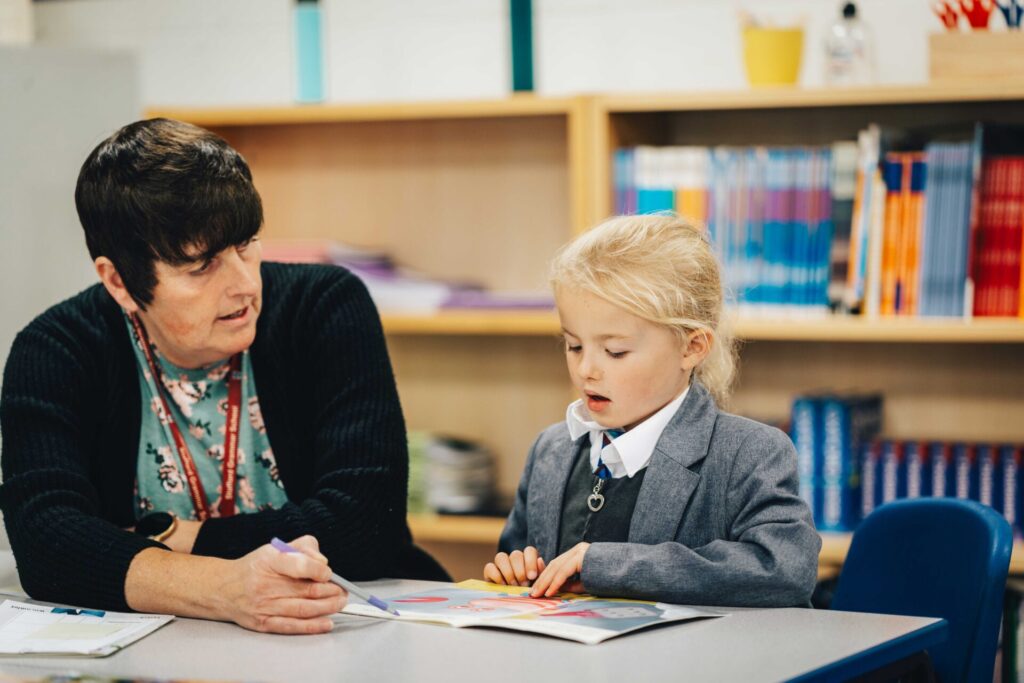
Read with your child every day and fill in the reading journal to let their teacher know. We’re lucky that all of our Reception pupils have one-to-one reading time with their class teacher every day, but with larger classes it can be difficult to fit this in once a week. Reading with your child every day at home can make a huge difference. We all like our child to be the best but do not get too worried if other children are on a higher reading level. All children develop and progress at different rates.
- Let us know if there is a problem.
One of the most important things is keeping in touch with us. Let your school know if you have concerns or if there is a problem. We love hearing from parents, as it gives us feedback about the things we don’t see at school.
Mornings are a busy time as the children arrive for class. Teachers do not always have time for an in-depth discussion at the start of the day. It is much better and easier to send an email or ask the office to make an appointment for a proper conversation. We are keen to listen but it is much easier when we have the time.
- Does your child have any medical needs?
Please give the school as much detail as possible about any health conditions your child has. We want to keep them safe and well so knowing how they are feeling is important. It is important to inform the school if these change at any time. Share any GP action plans, for example, asthma making sure all inhalers are labelled carefully.
Please keep them at home if they are unwell and let the office know.
- Socialisation
This has been difficult during the Covid pandemic over the past two years and yet is an important part of life. Try and encourage your child to share toys and communicate with other children in different environments. At the Prep. School we run free ‘Little Explorers’ sessions to help with these vital skills. We also have stay and play opportunities for current and prospective families. These are also an opportunity to meet the teacher. Find out if your chosen school has an induction programme or familiarisation days?
- Listen
Ask your child about their day and let them talk without bombarding them with questions. We know that it is heartbreaking if your child tells you that they have been on their own or they have no friends, or someone was mean to them but be careful not to take your child too literally and keep an open mind: children are not always the best witnesses and the day’s drama often blows over.
- What can I work on during the few months before my child joins Reception?
There are some basic skills which will help any child when they start school:
The first is being able to dress themselves. Most schools run exciting PE and games programmes and it is important that they can all get dressed in ten minutes so their PE lesson is not cut short. Also practise fastening and unfastening any buttons, zips, velcro, etc. This will save a lot of frustration when they are in school. At the Prep. School we have small classes making this a lot easier but for many classes it is quite a challenge to get a class of 30 ready.
The second is for them to be familiar with cutlery. The children will have their lunches together and so being able to carry food with their fork and cut with a knife makes a huge difference to make sure they eat a full meal.
From toilet training to hand washing. Make sure your child knows how to wipe properly, flush the toilet and wash their hands.
Finally, it’s useful if children can recognise their name when they start Reception Class as they will need to find their peg and recognise their belongings. You can support your child with this by pointing out their name, writing it together or building it with magnetic letters or something similar. They don’t have to know how to write it perfectly, but even getting used to holding a pencil properly can really help.
Learn more about Prep life
Welcome

Curriculum
